✦ KI

Concept Idea – Preserving, Sharpening and Making Knowledge Usable

Preserving, Sharpening and Making Knowledge Usable How an AI-Supported Knowledge Management Process Cushions the Skills Shortage – and Simultaneously Lays the Foundation for Reliable AI The Silent Crisis in Our Organizations The skills shortage is no longer an abstract future topic – it is everyday reality. Government agencies, utilities, industrial companies, and mid-sized businesses already feel how difficult it has become to fill open positions. And the situation is getting worse: Germany’s Federal Statistical Office expects that over the next 15 years, roughly 13.4 million members of the workforce will reach the statutory retirement age1 – far more than will be replaced through training, career changers, and immigration. The German Economic Institute also points out that many employees leave the labor market earlier than planned2 – meaning knowledge loss often arrives faster than workforce planning anticipates. The Institute for Employment Research (IAB) also emphasizes that even with high immigration, Germany’s labor force potential will shrink noticeably in the coming years3. The digital industry association Bitkom sees AI as the decisive lever to maintain productivity despite the shortage of skilled workers – and regularly quantifies the resulting value-creation gap in the tens of billions4. ...
17.04.2026 · 19 min · Niels Ophey

CAF Naming Convention

Naming Convention There is always a big discussion about how to implement a naming convention for Azure resources to be deployed. Often this article from the Microsoft Cloud Adoption Framework for Azure is used as a starting point for an organization’s own implementation. ...

18.07.2022 · 1 min · Niels Ophey

CAF Introduction - German Learning Path

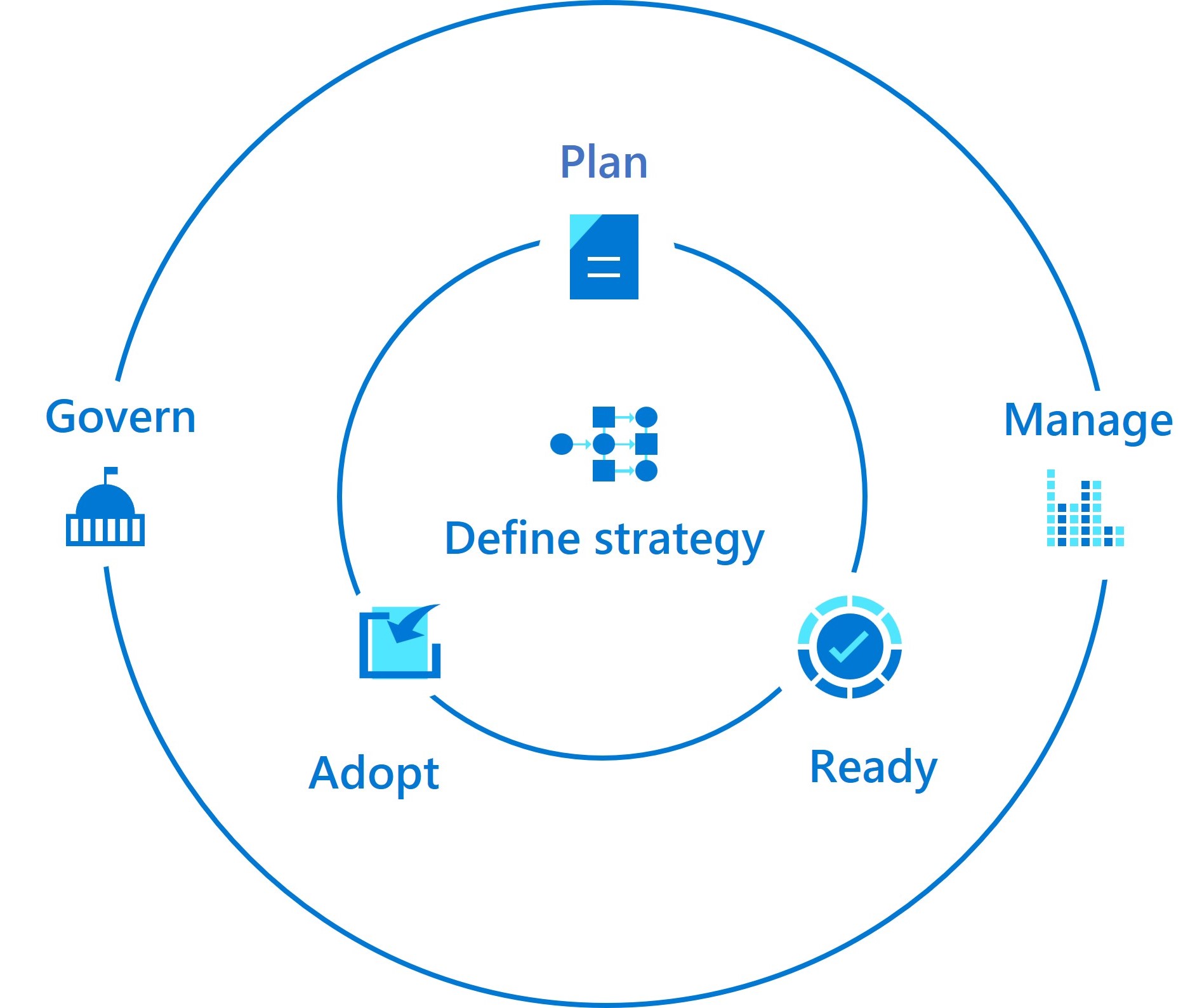
On our GitHub CAF Expert page, I have already published a learning path for the Cloud Adoption Framework (CAF) in German. If you are new to the CAF, please visit this short video series to learn more about this iterative and structured approach. Leveraging the cloud as an enabler for digital transformation. ...

01.06.2022 · 1 min · Niels Ophey

Azure - New Project Bicep

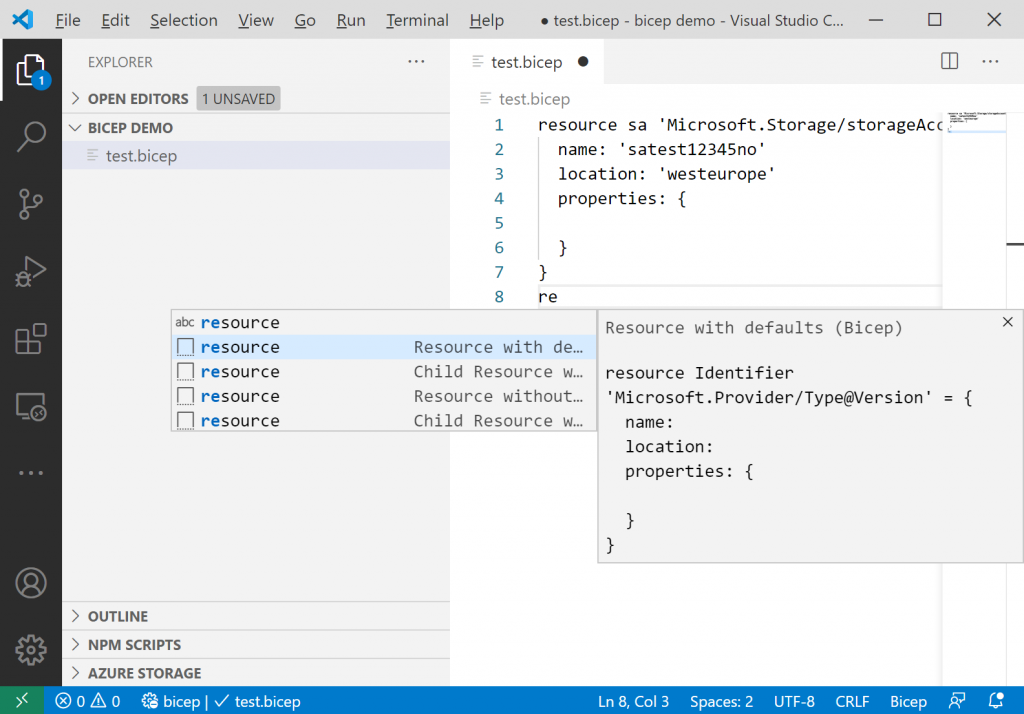
What is Bicep? Bicep is a Domain Specific Language (DSL) for deploying Azure resources declaratively. So, get out of ARM Templates and use a more declarative way to describe what you want to deploy to Azure. You can read more about the project on the GitHub page. My first step was to deploy the tooling for Bicep and the extension for Visual Studio Code. You find the installing instruction also in the GitHub project site. As soon as you have installed everything your VS Code will have support for *.bicep files: ...

11.09.2020 · 2 min · Niels Ophey

Azure - Link Collection Cloud Adoption Framework for Azure

The Cloud Adoption Framework is the One Microsoft approach to cloud adoption in Azure, consolidating and sharing best practices from Microsoft employees, partners, and customers. The framework gives customers a set of tools, guidance, and narratives that help shape technology, business, and people strategies for driving desired business outcomes during their adoption effort. Here is a short collection of links during a CAF related engagement: Start with the CAF documentation in the Microsoft Docs. ...

20.07.2020 · 2 min · Niels Ophey

Learn Terraform - Deploy an App Service instead of a scale set

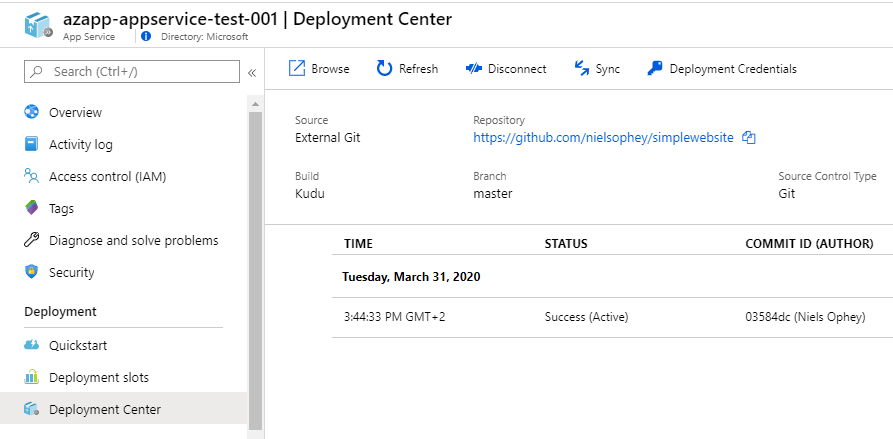
As mentioned in my post before, it is no so easy as a beginner to get everything realized in Terraform. The challenge was, deploy to a web site in Azure which is able to scale out behind a load balancer. After demonstrating the way be using virtual machine scale sets, I would like to show the way I found with Azure App Services as the service to go to. If you take a look at the simple sample in the documentation, you see that it is very easy to deploy a simple website in azure. Out of this, my idea was, it could not be so complicated in Terraform to achieve the same. ...

31.03.2020 · 4 min · Niels Ophey

Learn Terraform - Define a virtual machine scale set

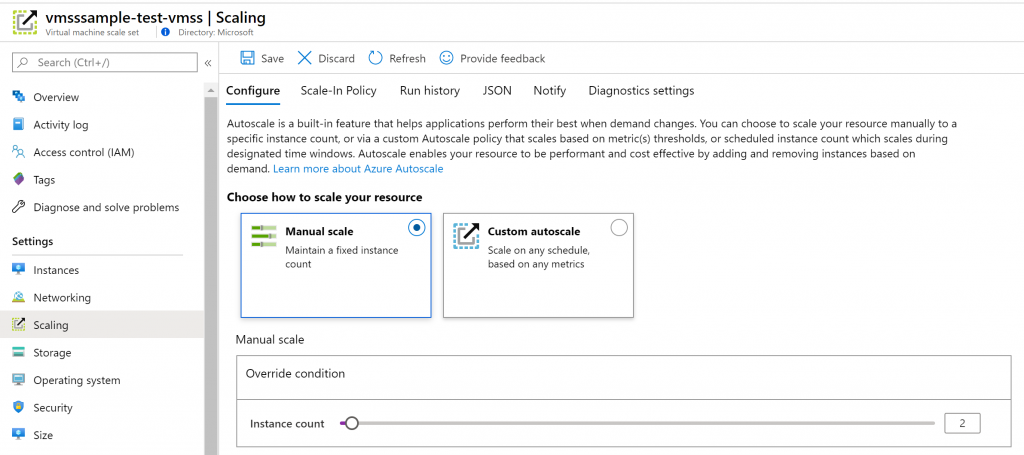
Now that we have one VM serving a web site, it is a common pattern to deploy not only one VM. Use multiple VMs to distribute the load. In Azure, this feature is called a virtual machine scale set (see the DOCs). To build this in Terraform we need the azurerm_linux_virtual_machine_scale_set resource type. The documentation shows a sample on how to use it. Please read first! But CAUTION - I have done everything several times and tried a lot of possible parameters to deploy the scales set including the Apache webserver. I did not find out, why the configuration of the custom script extension does not work during the initial deployment. Only if you change the VM count after the deployment, the custom script will be deployed. You can see this issue here. ...

31.03.2020 · 6 min · Niels Ophey

Learn Terraform - How can we make the Linux VM become a Web Server

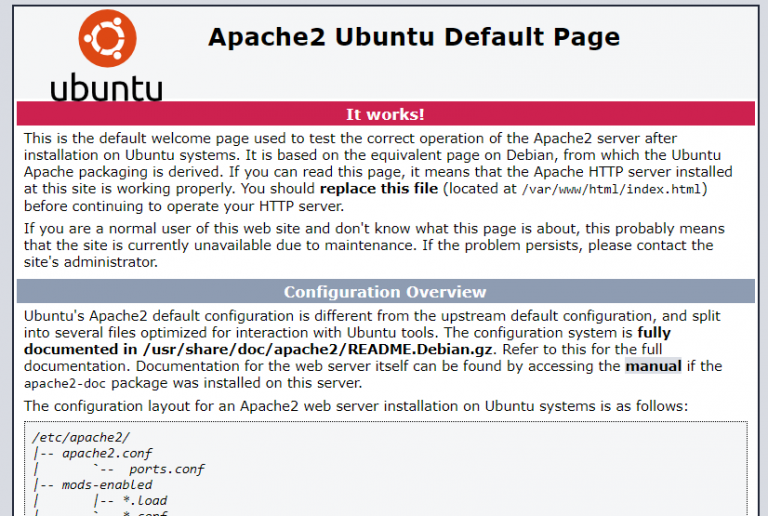
The next iteration of the VM is to configure a Web Server running on the VM and add an auto-scaling function as well as a load balancer. Due to the point, that I’m not so aware of Linux, I took a little bit different approach to have a Web Server running on the VM. Yevgeniy uses in his book the following “user_data” option to have a web site been served by our VM. ...

27.03.2020 · 3 min · Niels Ophey

Learn Terraform - deploy the first VM

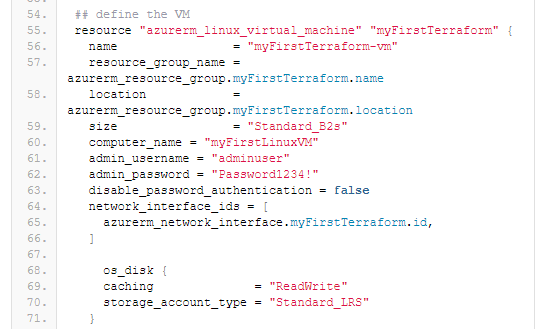
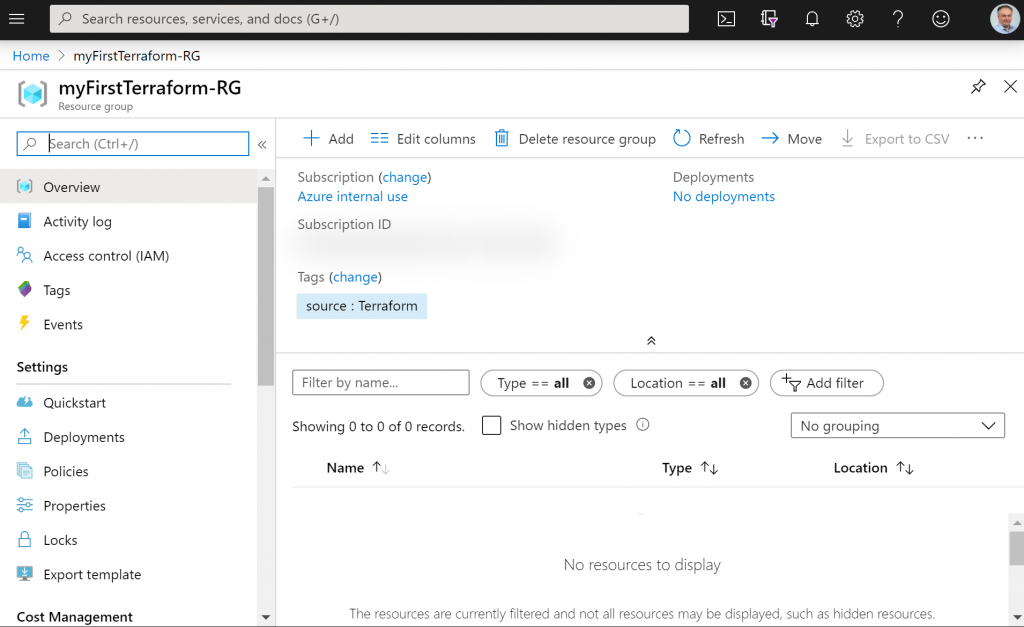
After terraform is installed on the computer you use to deploy your first cloud resources - the initial sample in chapter 2 is to deploy a VM. A Linux based VM. You can find all the samples out of the book from Yevgeniy under this repro in GitHub. So how do we do this in azure? Deploy your first VM in Azure One main difference to aws is that in Azure we deploy resources always in a resource group (RG) - so the script in Terraform is not so easy as in aws. ...

19.03.2020 · 4 min · Niels Ophey

Learn Terraform - get started...

After reading Chapter 1 of the book it was time to get my machine ready for using Terraform to script the deployments in Azure. So I search the Microsoft Docs for a short guide and found this short description. First Step - Install Terraform on my machine I decided to install Terraform in the Windows Subsystem for Linux (WSL) on my Windows10 machine. I’m on the fast-ring in the Windows10 insider program - so I’m already able to use WSL2. If you want to learn more about WSL2 visit the Microsoft page https://aka.ms/wsl2. To install Terraform in my WSL2 I opened the bash and entered the following command (use sudo of needed to have privileged rights): ...

15.03.2020 · 3 min · Niels Ophey

Learn Terraform

How I started I just decided to learn more about using Terraform to deploy services in azure. In the past, I deployed most of the time my services in the Azure by using the portal, the azure-CLI or using ARM templates. During a lot of discussions around automation, I heard a lot of people talking about Terraform as their choice for scripting their deployments. Especially thanks to my colleague Arnaud Lheureux - we sit together on the Microsoft Ready in the booth around the Cloud Adoption Framework and he showed me what he already has done with Terraform to deploy a landing zone in Azure. That was the impulse to start to learn more about Terraform… ...

15.03.2020 · 2 min · Niels Ophey